3K+ happy customers
Unlimited contact with doctors
100% online
Fast and discreet delivery
Dutch partner pharmacy

Finasteride & Minoxidil: The most effective combination against hair loss?
Finasteride and minoxidil are the two most effective and scientifically proven treatments for hereditary hair loss. In this article, we explain how both drugs work, what the differences are and why a combination treatment often gives the best results.
We understand it better than anyone: dealing with hair loss and looking for solutions can be frustrating. You have probably tried a lot of things, but most products produce little results and mainly cost a lot of money.
The reality is that only two drugs are actually scientifically proven to work against hereditary hair loss: finasteride and minoxidil.
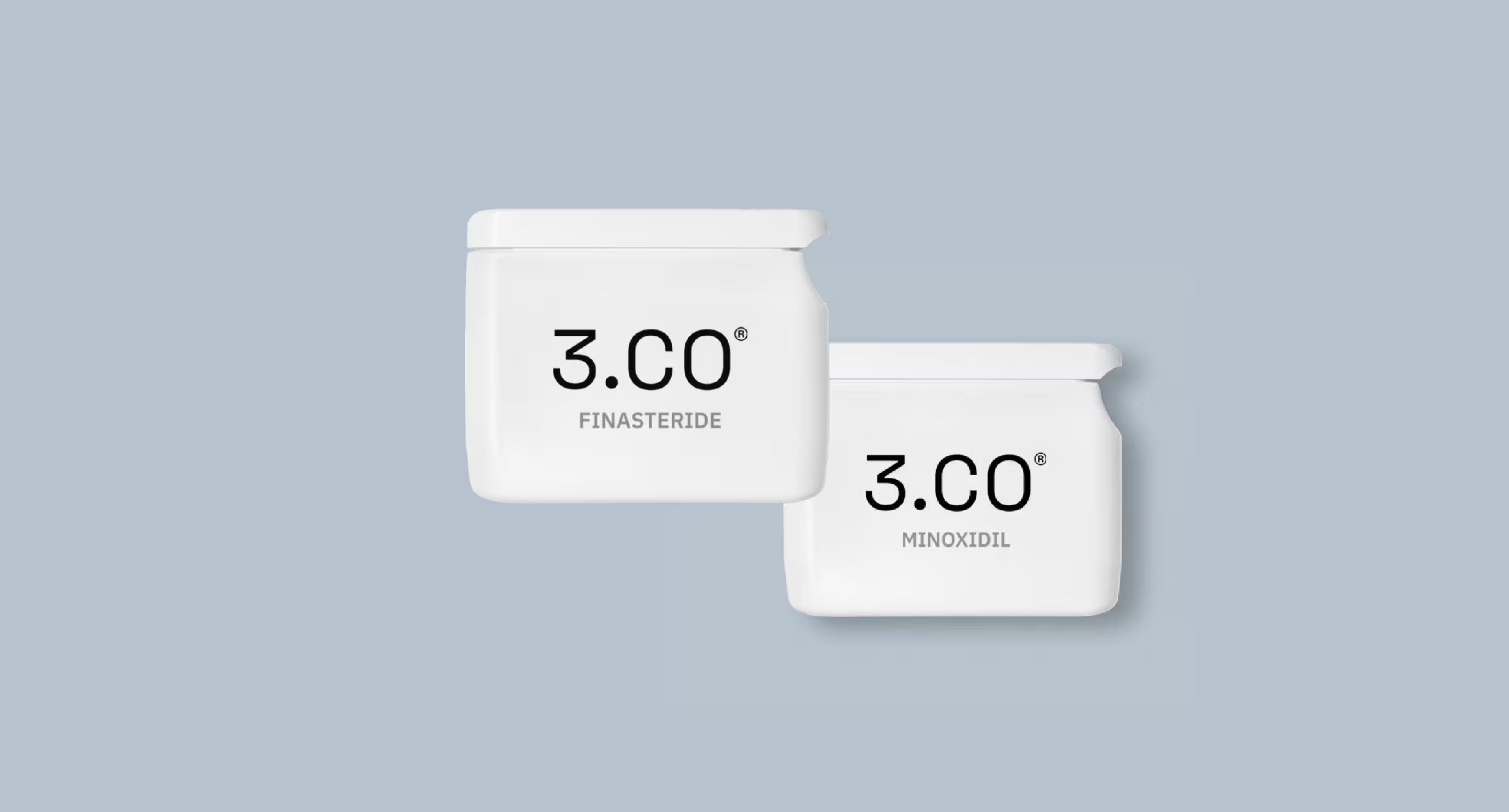
At 3CO, we offer a simple online consultation that allows you to get a doctor's prescription for finasteride (1 mg) and oral minoxidil. Your consultation is always personally reviewed by a BIG-registered doctor to determine if it is a safe option for you. Then you will receive the medication discreetly at home in a subscription form, so you will never run out of medication.
But what's the difference between finasteride and minoxidil? And how do you choose the treatment that best suits you? In this article, we explain it step by step.
How do Finasteride and Minoxidil work?
To understand what works better against hair loss, minoxidil or finasteride (1 mg), and whether they can be used together, let's first discuss how each of these treatment options works separately.
Finasteride and topical minoxidil are both FDA-approved for the treatment of androgenetic alopecia (hereditary baldness in men and women). Oral minoxidil is prescribed after a medical assessment.
The effects of finasteride and minoxidil are supported by a great deal of scientific evidence. However, there are clear differences in how these drugs work to stop hair loss and stimulate new hair growth.
How does minoxidil work?
Minoxidil was originally developed as a medicine for high blood pressure, but it soon became clear that it also stimulates hair growth. Since then, it has been used worldwide against hair loss.
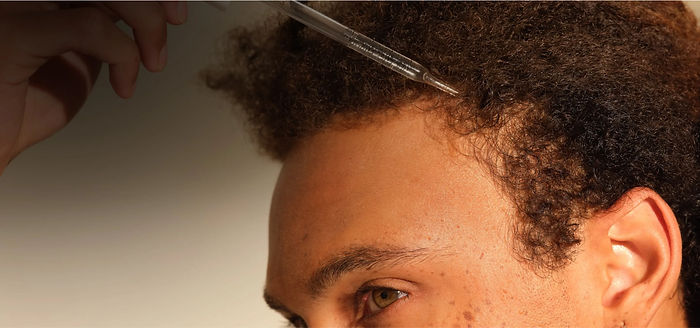
Topical minoxidil (lotion/spray)
The best-known variant is the topical minoxidil (5% solution or foam), which is applied directly to the scalp:
- Use twice a day.
- Works locally on hair follicles.
- Freely available without a prescription.
- Cons: may cause skin irritation and is often difficult to maintain due to daily application.
Oral minoxidil (pills)
At 3CO, we only offer oral minoxidil pills:
- One pill once a day (2.5 mg for men, 1.25 mg for women).
- Works via the bloodstream, stimulates general hair growth.
- No skin irritation like the lotion.
💡 Published in November 2024 JAMA Dermatology an international consensus of 43 hair loss experts from 12 countries. They concluded that low doses of oral minoxidil are a safe and effective treatment for various forms of hair loss. As a result, oral minoxidil is increasingly accepted as a serious treatment worldwide.
How does Finasteride (1mg) work?
Finasteride is a 5-alpha reductase inhibitor and works by blocking the conversion of testosterone to DHT. DHT is the hormone responsible for shrinking hair follicles and ultimately for hereditary baldness.
- Dosage: 1 mg daily (FDA approved for hair loss).
- Effective in maintaining existing hair.
- Works particularly well for hair loss around the crown and inlets.
Finasteride and minoxidil therefore tackle hair loss from different angles:
- Minoxidil prolongs the growth phase and stimulates blood flow (fertilizer for your hair).
- Finasteride protects hair follicles from damage caused by DHT (shield for your hair).
Minoxidil vs. Finasteride side effects
Both medications are relatively safe, but can cause side effects.
Possible side effects of topical minoxidil:
- Skin irritation, redness, or itching.
- Burning or dry skin.
- Temporary increased hair loss in the first months (shedding).
Possible side effects of oral minoxidil (low dose):
- Extra hair growth in other areas (hypertrichosis).
- Fluid retention (oedema).
- Heart palpitations or increased heart rate.
- Headaches or dizziness.
- Rare: low blood pressure or allergic reactions.
Possible side effects of finasteride (1 mg):
- Sexual side effects (decreased libido, erectile dysfunction, changes in ejaculation volume).
- Rare: mood swings or depressive thoughts.
Minoxidil vs Finasteride results
Now the question you probably really want answered: Which is better for my hair loss, finasteride or minoxidil?
The answer is... both.
Sorry if you were expecting a more strong opinion, but the fact is that several studies on the results of minoxidil and finasteride show that both hair loss treatments are highly effective.
One study looked at 904 men with androgenetic alopecia. After using a 5% dose of minoxidil twice daily for one year, 62 percent saw a significant reduction in hair loss.
In a large meta-analysis of men who took 1 mg of finasteride daily, 70% experienced a decrease in hair loss. In addition, numerous studies show that both finasteride and minoxidil show a decrease in hair loss and also improve hair thickness (all sources are listed at the end of this blog).
In short: Minoxidil and finasteride are the only two drugs that really work against hair loss; the rest of the products such as oil, caffeine shampoo or supplements don't work. At least, they won't stop your hair loss or make your hair thicker.
The big difference between the two drugs is that finasteride blocks a hormone that stops hair loss, while minoxidil extends the active phase of a hair and improves blood flow to the hair follicles, leading to more hair growth.
Can I use Minoxidil and Finasteride together?
So, minoxidil and finasteride offer similar results, but can you also use them together?
Fortunately, research shows that a combined treatment is not only safe, but also extra effective in improving your hair and reducing hair loss.
A review of several scientific studies has shown that a combined treatment of finasteride (1 mg) with topical or oral minoxidil provides better results in stopping hair loss and improving hair quality than using just one of the two medications.
Since they work in different ways, there is no risk when using finasteride and minoxidil together. Minoxidil stimulates hair growth and prolongs the hair growth phase, while finasteride in pill form blocks the conversion of testosterone to DHT, the main cause of hereditary baldness.
As studies show, you can get better results by taking finasteride and minoxidil together than using just one medication. So if you want to both stop your hair loss and promote hair growth in bald areas, we recommend using both treatments.
How do you choose between minoxidil or Finasteride?
Now that you're up to date with finasteride (1 mg) and minoxidil, how do you choose which one to use?
Here are a few things to keep in mind when considering your options:
- Both minoxidil and finasteride are options for anyone starting to see signs of thinning hair, inlets, or other symptoms of hereditary baldness.
- You don't have to have a minimum level of hair loss to use minoxidil or finasteride. However, it's important to have realistic expectations: it may not be possible to get all your hair back, but you can slow down hair loss with finasteride and improve thinner hair or bald spots with minoxidil.
Topical minoxidil is freely available and can be purchased immediately. The downside: you have to apply it to your scalp twice a day, which is difficult to maintain.
Oral minoxidil is taken as a pill, once a day, making it much easier to use, and more and more studies are showing that it can be just as effective (or sometimes more effective). Because oral minoxidil is prescription-only, you will go through an online consultation with us for this.
Finasteride is highly effective in stopping hair loss and easy to use (1 pill per day). It blocks DHT but may cause side effects in some men.
Do you suffer from hair loss a lot? Then a combination treatment is often the best choice. You take finasteride and also use minoxidil (topically or orally) for extra stimulation of hair growth. This way, you can be sure that you are doing everything that has been scientifically proven to preserve your hair!
Resources
- Asfour, L., Cranwell, W., Sinclair, R. Male Androgenetic Alopecia. [Updated 2023 Jan 25]. In: Feingold KR, Anawalt B, Blackman MR, et al., editors. Endotext [Internet]. South Dartmouth (MA): MDText.com, Inc.; 2000-. Retrieved from https://www.ncbi.nlm.nih.gov/books/NBK278957/
- Patel, P., Nessel, T.A., Kumar, D. Minoxidil. [Updated 2023 Aug 14]. In: StatPearls [Internet]. Treasure Island (FL): StatPearls Publishing; 2023 Jan. Retrieved from https://www.ncbi.nlm.nih.gov/books/NBK482378/
- Zito, P.M., Bistas, K.G., Syed, M. Finasteride. [Updated 2022 Aug 25]. In: StatPearls [Internet]. Treasure Island (FL): StatPearls Publishing; 2023 Jan. Retrieved from https://www.ncbi.nlm.nih.gov/books/NBK513329/
- Finasteride tablets for oral use, FDA prescribing information. (n.d.). Accessdata.fda.gov. Retrieved from https://www.accessdata.fda.gov/drugsatfda_docs/label/2014/020788s024lbl.pdf
- Nestor, M.S., Ablon, G., Gade, A., Han, H., & Fischer, D.L. (2021). Treatment options for androgenetic alopecia: Efficacy, side effects, compliance, financial considerations, and ethics. Journal of Cosmetic Dermatology, 20 (12), 3759-3781. Retrieved from https://onlinelibrary.wiley.com/doi/pdf/10.1111/jocd.14537
- Yanagisawa, M., Fujimaki, H., Takeda, A., & Nemoto, M. (2019). Long-term (10-year) efficacy of finasteride in 523 Japanese men with androgenetic alopecia. 5. Retrieved from https://www.researchgate.net/publication/337105943_Long-term_10-year_efficacy_of_finasteride_in_523_Japanese_men_with_androgenetic_alopecia
- Piraccini, B. M., Blume-Peytavi, U., Scarci, F., Jansat, J. M., Falqués, M., Otero, R., Tamarit, M.L., Galván, J., Tebbs, V., Massana, E., & Topical Finasteride Study Group (2022). Efficacy and safety of topical finasteride spray solution for male androgenetic alopecia: a phase III, randomized, controlled clinical trial. Journal of the European Academy of Dermatology and Venereology: JEADV, 36 (2), 286—294. Retrieved from https://www.ncbi.nlm.nih.gov/pmc/articles/PMC9297965/
- Chandrashekar, B. S., Nandhini, T., Vasanth, V., Sriram, R., & Navale, S. (2015). Topical minoxidil fortified with finasteride: An account of maintenance of hair density after replacing oral finasteride. Indian dermatology online journal, 6 (1), 17—20. Retrieved from https://www.ncbi.nlm.nih.gov/pmc/articles/PMC4314881/
- Chen, L., Zhang, J., Wang, L., Wang, H., & Chen, B. (2020). The Efficacy and Safety of Finasteride Combined with Topical Minoxidil for Androgenetic Alopecia: A Systematic Review and Meta-Analysis. International Society of Aesthetic Plastic Surgery. Retrieved from https://cdn.mednet.co.il/2012/05/the-efficacy-and-safety-of-finasterideminoxidil.pdf
- Tanglertsampan C. (2012). Efficacy and safety of 3% minoxidil versus combined 3% minoxidil/0.1% finasteride in male pattern hair loss: a randomized, double-blind, comparative study. Journal of the Medical Association of Thailand = Chotmaihet thangphaet, 95 (10), 1312—1316. Retrieved from https://pubmed.ncbi.nlm.nih.gov/23193746/
- Suchonwanit, P., Thammarucha, S., & Leerunyakul, K. (2019). Minoxidil and its use in hair disorders: a review. Drug Design, Development, and Therapy, 13, 2777—2786. Retrieved from https://www.ncbi.nlm.nih.gov/pmc/articles/PMC6691938/
- Lee SW, Juhasz M, Mobasher P, Ekelem C, Mesinkovska NA. (2018). A Systematic Review of Topical Finasteride in the Treatment of Androgenetic Alopecia in Men and Women. J Drugs Dermatol. Retrieved from https://www.ncbi.nlm.nih.gov/pmc/articles/PMC6609098/