3K+ happy customers
Unlimited contact with doctors
100% online
Fast and discreet delivery
Dutch partner pharmacy

Hair loss in women: causes, signs and treatments
Hair loss isn't just a man's thing. Yet sometimes it feels like that, most of the attention, products and treatments are aimed at men. But the reality is different: it is estimated that 40% of women over 50 experience noticeable hair loss. And for many women, it starts earlier. In this article, we explain why women lose hair, which forms are most common, how to recognize them and what to do about them.

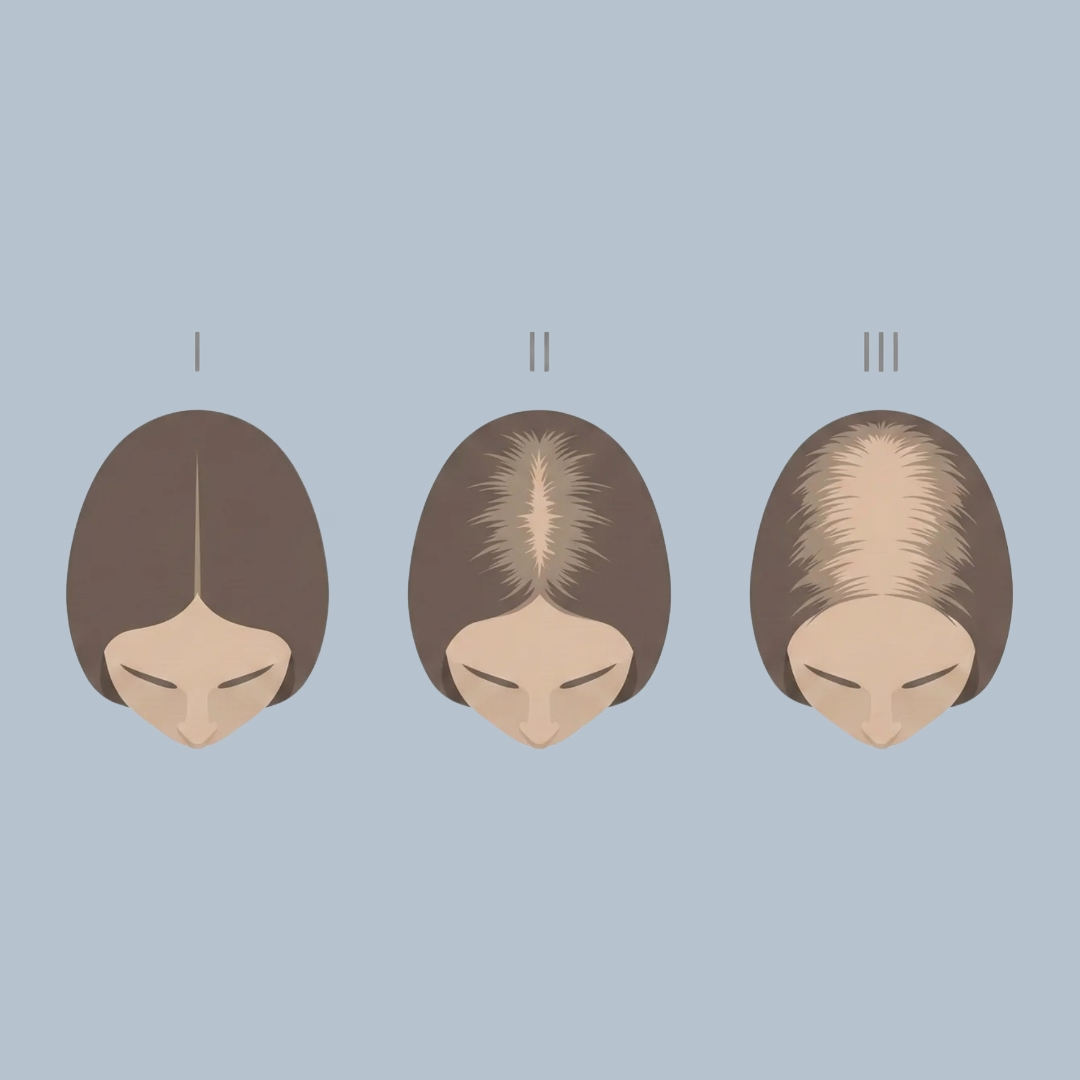
1. Female hereditary baldness (FPHL)
Just like men, women can also have a genetic predisposition to hair loss. This is called Female Pattern Hair Loss (FPHL), or female hereditary baldness. However, the pattern differs from male baldness: women rarely get a completely bald head. Instead, the hair becomes diffusely thinner, especially at the crown and parting. The hairline usually remains intact.
FPHL, like men, is affected by DHT, but the relationship is less direct. Women naturally have lower testosterone levels, and follicle sensitivity plays a larger role. After menopause, when estrogen levels fall, FPHL may accelerate.
2. Telogen effluvium: temporary hair loss
This is probably the most common type of hair loss among women of reproductive age. Telogen effluvium occurs when a large part of the hair leaves the growth phase at the same time and goes to the resting phase, after which they fall out.
Causes include:
- Childbirth (postpartum hair loss, very common)
- Severe weight loss or crash diets
- Severe stress, illness, or surgery
- Discontinuing birth control pills
- Iron or protein deficiency
The good news: telogen effluvium is temporary. The hair usually grows back on its own within six to twelve months. Treatment is rarely necessary, but addressing the underlying cause does help.
3. Other causes of hair loss in women
Thyroid disorders An underactive thyroid (hypothyroidism) is a common and under-diagnosed cause of hair loss in women. A blood test at the doctor can provide an answer.
PCOS (Polycystic Ovary Syndrome) PCOS is associated with increased androgen levels, which can cause hair loss on the head, at the same time as excessive hair growth elsewhere on the body.
Alopecia areata An autoimmune disorder that is as common among women as it is in men. Characterized by sudden, round bald spots.
Traction alopecia Hair loss due to prolonged mechanical stress on the hair follicles, caused by tight hairstyles such as braiding, bunting or hair extensions.
Drug use Certain medications may cause hair loss, including certain contraceptives, blood thinners, and antidepressants.
4. How do you recognize hair loss in women?
The signs of hair loss in women are more subtle than in men, which makes it more difficult to intervene in time. Please note:
- A wider separation the space between your hair on the skull becomes visible
- More hair in the brush or on your pillow than normal
- Thinning ponytail the same amount of hair feels lighter
- Visible scalp in strong light or when raising your hair
- Less volume that is not easy to explain
5. Treatments: What works?
Treatment depends a lot on the cause. With telogen effluvium, the problem often resolves by itself. In the case of female hereditary baldness, however, active treatment is necessary to prevent further decline.
Oral minoxidil This is currently the most promising treatment for female hair loss. In an international consensus published in JAMA Dermatology (2024), 43 experts from 12 countries agreed that low doses of oral minoxidil are effective and safe for women with female hereditary baldness and telogen effluvium. The recommended starting dose for women is 1.25 mg per day.
Oral minoxidil works by improving blood flow to the hair follicles and prolonging the growth phase. The hair grows visibly thicker and fuller. Learn more in our in-depth article: Minoxidil: the best hair growth remedy for women.
Topical minoxidil (lotion/foam) The topical variant has been approved for women for some time and is freely available. Disadvantage: You have to apply it twice a day, which sometimes leads to skin irritation and oily hair.
What works not for women? Finasteride is currently not approved for women and is not prescribed for female use with 3CO. This is because finasteride carries a teratogenic risk (harmful to an unborn child) and the evidence for effectiveness in women is less strong than in men.
6. When to see a doctor?
Go to the doctor if:
- Your hair loss occurs suddenly and severely
- You also have other symptoms (tiredness, weight change, irregular periods)
- Your hair loss doesn't improve after six months
- You have bald spots instead of diffuse hair loss
At 3CO, you can also discuss whether oral minoxidil is suitable for you via an online consultation with a BIG-registered doctor. Fast, discreet and from home.
Scientific sources
- Yagiz, M. A., et al. (2024). Low-Dose Oral Minoxidil Initiation for Patients With Hair Loss: An International Modified Delphi Consensus Statement. JAMA Dermatology.
- Piraccini, B.M., & Alessandrini, A. (2014). Androgenetic alopecia. Italian Journal of Dermatology and Venereology, 149 (1), 15—24.
- Blumeyer, A., et al. (2011). Evidence-based (S3) guideline for the treatment of androgenetic alopecia in women and men. Journal of the German Society of Dermatology, 9 (S6), S1—S57.