3K+ happy customers
Unlimited contact with doctors
100% online
Fast and discreet delivery
Dutch pharmacies


Why do men go bald?
You're in the shower, the drain is full of hair. Or you look at a photo from three years ago and think: was my hair really that much fuller back then? It's a familiar moment for many men, but the question that comes next isn't one you'll get answered just like that: why am I actually going bald? The short answer: it's due to your genes and a hormone called DHT. But there is much more to say. In this article, we explain step by step why men go bald, what the role of heredity and hormones is, and. perhaps more importantly, what you can do about it.

1. The most common cause: androgenetic alopecia
In as many as 95% of cases of male pattern baldness, the cause is the same: androgenetic alopecia, better known as male hereditary baldness. This is not a disease in the classical sense of the word, but a genetically determined sensitivity of your hair follicles to a specific hormone.
Do you recognize the pattern of receding inlets above the temples, followed by a balding crown that eventually comes together? This is the characteristic pattern of androgenetic alopecia, laid down in the so-called Norwood scale.
Significant: around 20% of men will have to deal with this at the age of twenty. At thirty, this figure is 30%, at forty it is 40%, and so on. So baldness is almost a universal male experience, even if it sometimes feels very lonely.
2. What is DHT and what does it do to your hair?
The hormone dihydrotestosterone, abbreviated DHT, is the main culprit in male pattern baldness. DHT is a by-product of testosterone: the enzyme 5-alpha reductase converts testosterone to DHT in your skin and hair follicles.
In men who are genetically sensitive to DHT, DHT molecules bind to the receptors in the hair follicles. The result: the follicles shrink gradually. The hair that grows out becomes thinner, shorter and less pigmented until the follicle stops producing altogether.
This process is called follicular miniaturization and is irreversible if it has advanced too far. That is why early intervention is so important.
Want to know more about DHT and how it works? Then read our detailed article: What is DHT and what does it do to your hair?
3. The role of genetics in baldness
Baldness is not a destiny that your father transmits to you through the male line, although it is more complex than that. You inherit a predisposition to baldness from both parents, and multiple genes play a role.
The most influential gene is on the X chromosome, which you inherit from your mother. So don't just look at your dad's side: if your mother's father or her brothers are (or were) bald, you're significantly more likely to be too.
That said: genetics is no one-way guarantee. You can have bald ancestors and still keep your hair until old age, and vice versa. The sensitivity of your follicles to DHT is the deciding factor.
4. Other causes of hair loss in men
While androgenetic alopecia is by far the most common cause, there are other reasons why your hair may fall out:
Telogen effluvium A temporary form of hair loss that occurs after a shock to the body: major surgery, high fever, severe stress, a strict diet, or a major hormonal change. The hair usually falls for two to four months after the trigger off, which can be confusing. The good news: telogen effluvium is almost always temporary and dissolves on its own.
Alopecia areata An autoimmune disorder in which the immune system mistakenly attacks the hair follicles. This results in round, sudden bald patches on the head or elsewhere on the body. Alopecia areata requires treatment other than hereditary baldness.
Nutrient deficiency A severe lack of iron, zinc, or biotin can cause hair loss. This is relatively rare among men in the Netherlands, but it is worth checking if your hair loss suddenly occurs without a clear cause.
Drug use Some medications, including certain antidepressants, blood thinners, and chemotherapy, may cause hair loss as a side effect.
5. How fast do you go bald?
That varies enormously from person to person. Some men lose much of their hair within five years of the first signs; others lose hair gradually over twenty years without ever going completely bald.
The rate at which you go bald depends on:
- The strength of your genetic predisposition
- The amount of DHT in your body
- The sensitivity of your follicles to DHT
- How early do you start treatment
This last point is crucial. Once lost, hair is difficult or impossible to recover. The sooner you start an effective treatment, the more likely you are to keep your head of hair.
6. What can you do about male pattern baldness?
The good news: hereditary baldness is treatable. There are two science-proven drugs:
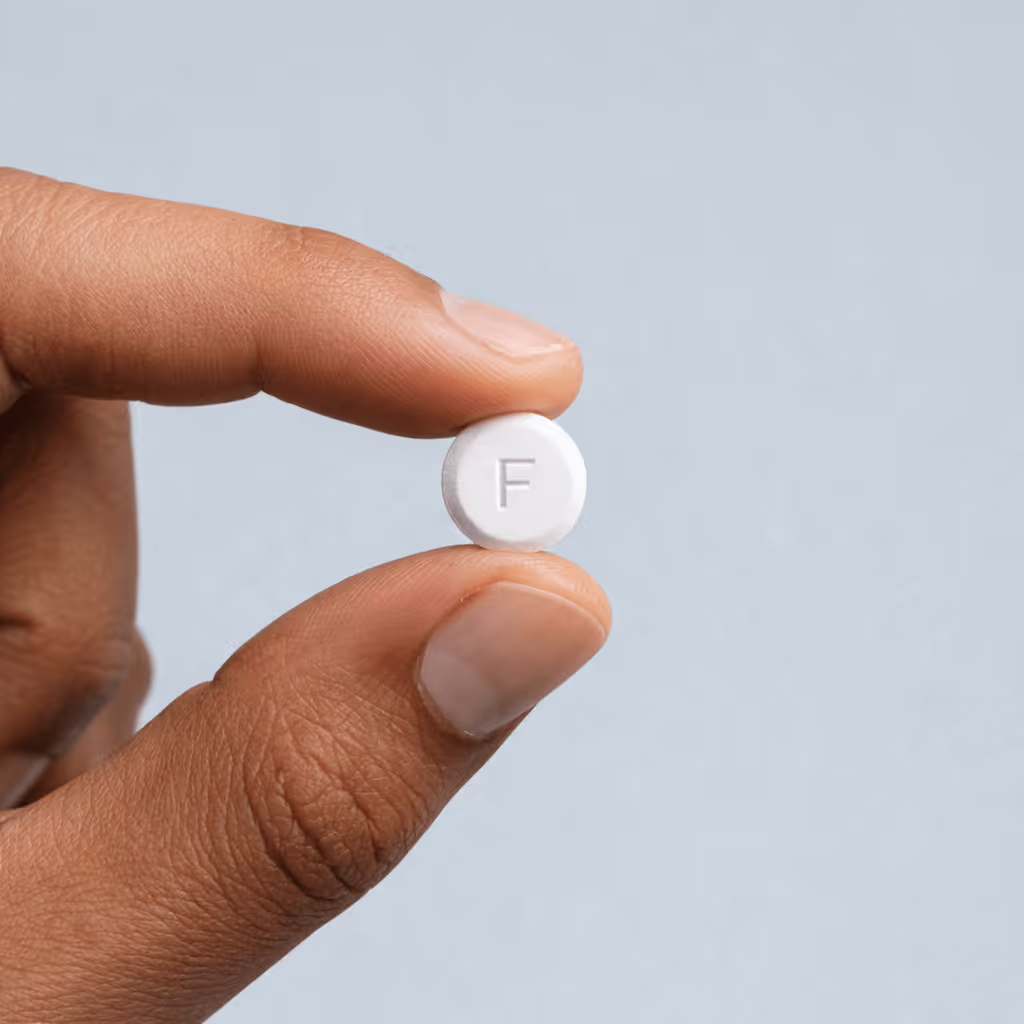
Finasteride: the most effective medicine for male pattern baldness. Finasteride inhibits the enzyme 5-alpha reductase, causing 70% less DHT to be produced. In 9 out of 10 men, hair loss stops or slows down significantly. Learn more in our article: Finasteride against hair loss.
Oral minoxidil: stimulates blood flow to the hair follicles and prolongs the growth phase of the hair. Can be used alone or in combination with finasteride. Read more: Minoxidil hair loss pills.
The combination of both works most powerfully. Finasteride addresses the cause (DHT), while minoxidil stimulates growth. You can read more about this in: Finasteride & Minoxidil: The Most Effective Combination?
At 3CO, you can easily complete an online consultation. A BIG-registered doctor will personally assess your situation and determine which treatment is best for you. No waiting room, no hassle, but safe, fast and discreet.
Scientific sources
- Kaufman, K.D. (2002). Androgens and alopecia. Molecular and Cellular Endocrinology, 198 (1—2), 89—95.
- Randall, V.A. (2007). Hormonal regulation of hair follicles exhibits a biological paradox. Seminars in Cell & Developmental Biology, 18 (2), 274—285.
- Heilmann-Heimbach, S., et al. (2017). Meta-analysis identifies novel risk loci and yields systematic insights into the biology of male-pattern baldness. Nature Communications, 8, 14694.