3K+ happy customers
Unlimited contact with doctors
100% online
Fast and discreet delivery
Dutch partner pharmacy

Finasteride timeline: how long does it take for finasteride to work?
Wondering how long it takes for finasteride to work? In this article, we explain what to expect in the first weeks and months, how finasteride affects hair, and when most men see visible results.

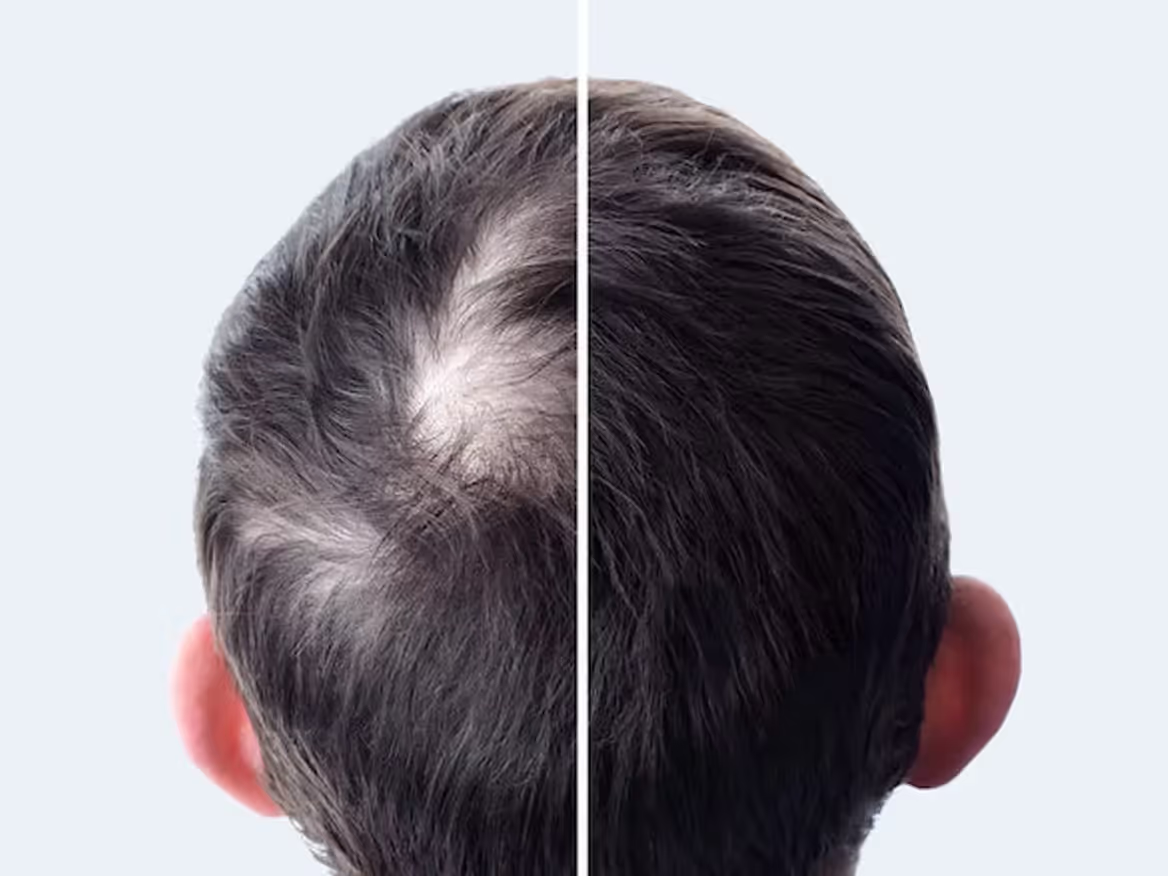
If you suffer from male baldness, you've probably heard of a medication called Finasteride.
Finasteride is a prescription medication used to treat male pattern baldness. It has been approved by the FDA and a large number of scientific studies have shown that it can really stop hair loss and stimulate hair growth.
Unfortunately, although finasteride cannot permanently cure male pattern baldness, it is one of the most reliable and effective treatments available to slow hair loss and promote hair growth.
Finasteride works well, but the results it provides don't come within a few weeks. Generally, you should wait a few months before you can see improvements in the quality of your hair and reducing your hair loss.
Below, we've created a timeline of what to expect after you start taking finasteride.
The basics about Finasteride
Before we get into the specific details of how long it takes for finasteride to work, let's first discuss the basics of what finasteride is and how it works as a hair loss treatment:
- Finasteride belongs to a class of medications called 5-alpha reductase inhibitors. It works by stopping your body from converting testosterone into dihydrotestosterone (DHT), the hormone responsible for male pattern baldness. For more information about how Finasteride helps prevent hair loss, read our blog: Finasteride against hair loss.
- You can only buy Finasteride in the Netherlands with a prescription. You can get this recipe by following our free online consultation. In the blog 'Buy Finasteride: Is it available without a prescription?'we delve deeper into everything you need to know about buying Finasteride in the Netherlands.
- Although finasteride starts blocking DHT immediately, it generally takes a few months before this medication shows a noticeable reduction in your hair loss or an improvement in the quality of your hair.
- As with any medication, you also have the risk of side effects when taking Finasteride. The most common are erectile dysfunction, ejaculation disorders, and decreased libido. We've listed everything extensively for you in our blog: 'What are the side effects of Finasteride? '
Finasteride and the Hair Growth Cycle
The reason it takes a while before you notice a change in your hair loss and the quality of your hair has to do with the hair's growth cycle. This hair growth cycle is divided into four phases.
The process starts with your hair growing from a hair follicle during the anagen phase. As the hair gets longer, it is eventually pushed through your scalp, making it visible. The anagen phase of each hair, or growth phase, can last several years.
Finasteride enters your bloodstream almost immediately and begins to lower DHT levels. However, since it takes time for new hair to grow to a visible length, you won't immediately see the results of Finasteride. You'll usually notice a gradual improvement in your hair over the course of a few months.
Months 1 to 3: Finasteride starts working
In the first three months after starting Finasteride, you will probably notice little or no change. This doesn't mean the drug isn't working; it's simply too early to see the effects on hair growth. During this period, it is important that you continue to take the medication consistently.
Months 3 to 6: first visible results
After about three to six months, the first results may become visible. This can be in the form of reduced hair loss or a start of new hair growth, especially in areas such as the hairline and crown. A 2004 study found that men with male hereditary baldness already saw significant improvements after 12 weeks of use.
Month 12: Clear hair improvements
After 12 months of consistent use of Finasteride, clear improvements are usually visible. Studies show that around 85 percent of men experience a major reduction in hair loss after one year of use. This can range from a sharp reduction to a complete cessation of hair loss. In 50 percent of users, hair grows back thicker and healthier, and in some cases (mainly on the crown), hair can grow in previously balding areas.
Long term results of finasteride
In the long term, Finasteride remains effective. Studies over two years and even five years show that men who continue to use Finasteride usually experience a sustained reduction in hair loss and improved hair growth.
Personal differences and expectations at Finasteride
It's important to remember that everyone's hair is different and that Finasteride's results may vary. In some cases, the drug may be more to prevent further hair loss than to stimulate new growth. If you don't notice any improvements after 12 months, it's best to talk to a healthcare provider. Finasteride may not be the right treatment for your specific situation.
Ready to fight hair loss? Start your free online consultation below and find out if finasteride is a safe option for you. If you're looking for more information, check out our other blogs for in-depth insights and advice.
Resources
- Zito, P.M., Bistas, K.G. & Syed, K. (2022, May 8). Finasteride. StatPearls. Retrieved from https://www.ncbi.nlm.nih.gov/books/NBK513329/
- Kinter, K.J. & Anekar, A.A. (2022, March 9). Biochemistry, Dihydrotestosterone. StatPearls. Retrieved from https://www.ncbi.nlm.nih.gov/books/NBK557634/
- Ho, C.H., Sood, T. & Zito, P.M. (2021, November 15). Androgenetic Alopecia. StatPearls. Retrieved from https://www.ncbi.nlm.nih.gov/books/NBK430924/
- Hoover, E., Alhajj, M. & Flores, J. L. (2021, July 26). Physiology, Hair. StatPearls. Retrieved from https://www.ncbi.nlm.nih.gov/books/NBK499948/
- Kawashima, M., et al. (2004). Finasteride in the treatment of Japanese men with male pattern hair loss. European Journal of Dermatology. 14 (4), 247-254. Retrieved from https://pubmed.ncbi.nlm.nih.gov/15319158/
- Leyden, J., et al (1999, June). Finasteride in the treatment of men with frontal male pattern hair loss. Journal of the American Academy of Dermatology. 40 (6 Pt 1), 930-937. Retrieved from https://pubmed.ncbi.nlm.nih.gov/10365924/
- Finasteride tablet, film coated, FDA label. (2021, June). Retrieved from https://www.accessdata.fda.gov/spl/data/3c8dff7e-41ab-46db-bacf-c41cc237f9d9/3c8dff7e-41ab-46db-bacf-c41cc237f9d9.xml
- Shapiro, J. & Kaufman, K.D. (2003). Use of Finasteride in the Treatment of Men With Androgenetic Alopecia (Male Pattern Hair Loss). Journal of Investigative Dermatology Symposium Proceedings. 8 (1), 20-23. Retrieved from https://www.jidsponline.org/article/S0022-202X(15)52935-7/fulltext
- Yoshitake, T., et al. (2015, July). Five-year efficacy of finasteride in 801 Japanese men with androgenetic alopecia. The Journal of Dermatology. 42 (7), 735-738. Retrieved from https://pubmed.ncbi.nlm.nih.gov/25903108/
- Finasteride. (2022, June 15). Retrieved from https://medlineplus.gov/druginfo/meds/a698016.html
- Hu, R., et al. (2015). Combined treatment with oral finasteride and topical minoxidil in male androgenetic alopecia: a randomized and comparative study in Chinese patients. Dermatologic Therapy. 28 (5), 303-308. Retrieved from https://onlinelibrary.wiley.com/doi/abs/10.1111/dth.12246