3K+ happy customers
Unlimited contact with doctors
100% online
Fast and discreet delivery
Dutch partner pharmacy

Minoxidil for women: how it works, usage & side effects
In women with hereditary hair loss, hair typically thins gradually around the part and on the top of the head. Minoxidil is one of the primary treatments for slowing down hair loss and stimulating hair growth. Minoxidil can be used in two ways: topically, as a lotion or foam applied to the scalp, or orally, as a tablet. Research shows that both forms can have similar effectiveness. The main differences therefore lie primarily in the method of use and potential side effects.

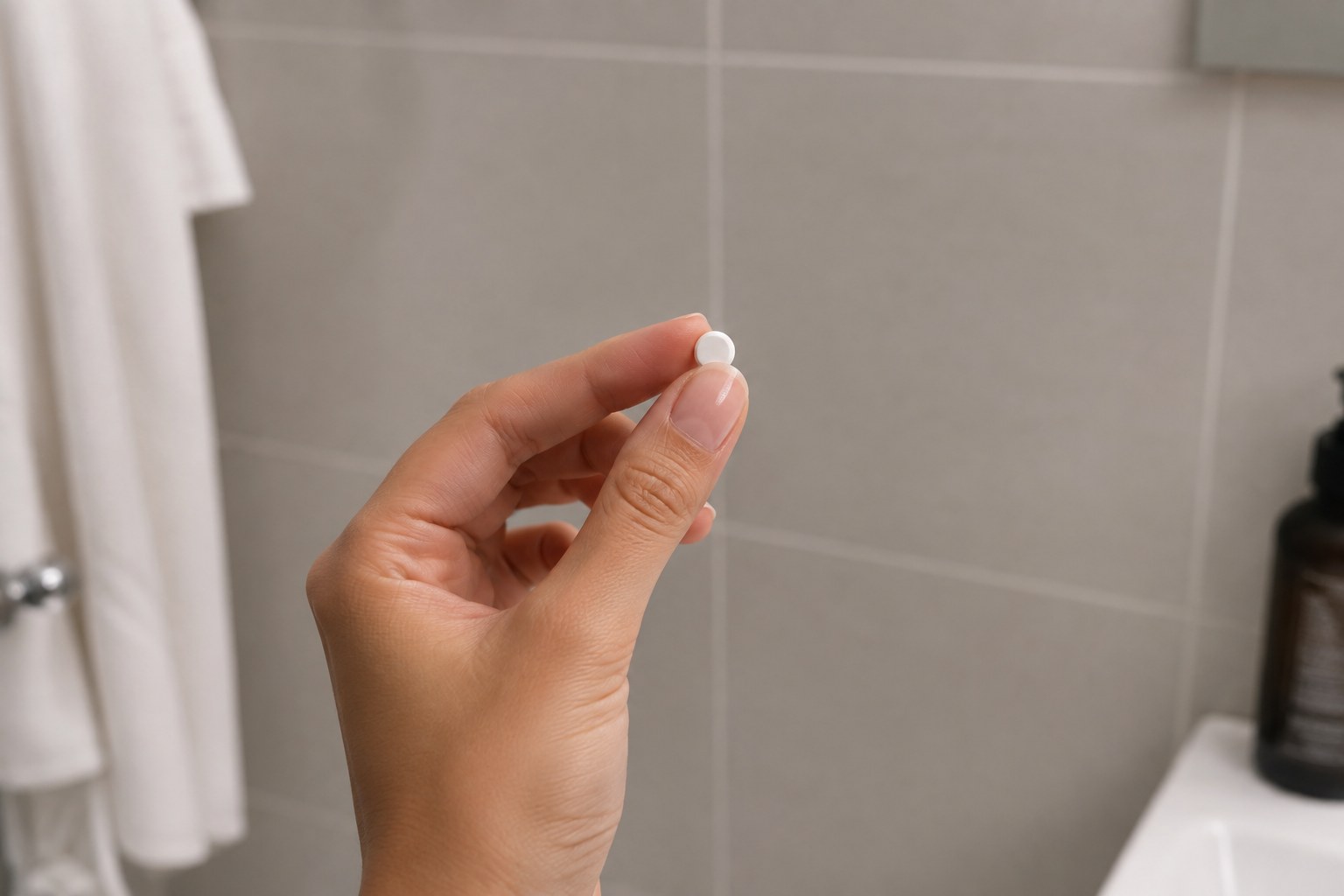
What does minoxidil do?
Minoxidil stimulates hair follicles and helps extend the hair's growth phase. As a result, it can:
- slow down further hair loss;
- thicken existing hair;
- improve hair density;
- stimulate new hair growth.
The effect occurs gradually. It usually takes 3 to 6 months before the first results are visible. After 12 months, you can properly evaluate the final result of the treatment.
Topical versus oral minoxidil
Minoxidil is the active ingredient in both treatments. The main difference is the method of administration: topical minoxidil is applied directly to the scalp, while oral minoxidil is taken daily as a tablet.
Research shows that the effectiveness is comparable. The choice between the two treatments therefore depends primarily on convenience, personal preference, and potential side effects.
| Vergelijking | Topische minoxidil | Orale minoxidil |
|---|---|---|
| Toedieningsvorm | Lotion of schuim op de hoofdhuid | Tablet |
| Frequentie | Meestal 1–2× per dag | Meestal 1× per dag |
| Effectiviteit | Bewezen effectief | Vergelijkbare effectiviteit |
| Gebruiksgemak | Dagelijks op de hoofdhuid aanbrengen | Eén tablet per dag |
| Bijwerkingen | Vooral lokale irritatie, jeuk en een droge hoofdhuid | O.a. extra haargroei, duizeligheid, vocht vasthouden en hartkloppingen |
| Recept | Varianten zonder recept verkrijgbaar | Prescription only; prepared by the pharmacy |
Topical minoxidil
Topical minoxidil is applied directly to the scalp as a lotion or foam, usually once or twice a day.
The product has been extensively researched and proven effective. The main drawback is practical: you must apply it consistently to the scalp. Additionally, it can cause a sticky or greasy feeling in the hair and may lead to itching, redness, flaking, or scalp irritation.
Oral minoxidil
Oral minoxidil is used in a low dosage as a tablet. The dosages for hair loss are much lower than those for which minoxidil was originally developed as blood pressure medication.
The main advantage is convenience: one tablet a day, instead of applying lotion to your hair twice daily.
Oral minoxidil requires a prescription. Therefore, a doctor will assess whether the treatment is medically appropriate beforehand.
Is oral minoxidil as effective as topical minoxidil?
Research indicates that oral and topical minoxidil have a comparable effectiveness in treating female pattern hair loss.
In a randomized study of women, 1 mg of oral minoxidil per day for 24 weeks was compared directly with 5% topical minoxidil. Both treatments improved hair density, and no significant difference in effectiveness was found between the two.
A second randomized study in women also showed similar improvements in hair density and hair diameter.
A recent meta-analysis of four randomized trials also found no significant difference between oral and topical minoxidil in improving hair density or hair diameter.
Oral minoxidil is therefore not chosen because it has been proven to work better, but because it can offer comparable results in a simpler form of administration.
Why does 3CO offer oral minoxidil?
At 3CO, we have chosen to offer oral minoxidil.
The main reason is convenience. Instead of applying lotion or foam to the scalp every day, you take one tablet daily. For a treatment that must be used consistently over the long term, this can be a significant advantage.
At the same time, research shows that the effectiveness of oral minoxidil can be comparable to that of topical minoxidil.
On the other hand, oral minoxidil is absorbed throughout the entire body and can therefore cause different side effects. This is why oral minoxidil is prescription-only and a 3CO doctor assesses whether the treatment is suitable beforehand.
Potential side effects
The potential side effects vary depending on the form of administration.
Topical minoxidil primarily causes local issues, such as:
- itching;
- redness;
- a dry or flaky scalp;
- irritation.
Oral minoxidil is absorbed into the bloodstream. A known side effect is increased hair growth, such as fine hairs on the face or arms.
Other possible side effects include:
- fluid retention or swollen ankles;
- dizziness;
- headaches;
- heart palpitations;
- lower blood pressure.
You can read more about the side effects of oral minoxidil here.
When will you see results?
Minoxidil does not work immediately. It usually takes about three to six months before you can properly assess any changes.
In the initial period, you may experience a temporary increase in hair loss. This is also known as shedding and can occur because the hair cycle is changing. You can find a detailed timeline here.
Pregnancy and breastfeeding
Minoxidil must not be used during pregnancy. Its use is also not recommended while breastfeeding.
Are you planning to get pregnant? Always discuss this with a doctor before you start using oral minoxidil.
Frequently asked questions about minoxidil for women
Werkt orale minoxidil even goed als topische minoxidil?
Onderzoek laat een vergelijkbare effectiviteit zien. Gerandomiseerde studies bij vrouwen vonden verbeteringen in haardichtheid met zowel orale als topische minoxidil. Ook een meta-analyse van vier gerandomiseerde onderzoeken vond geen significant verschil in haardichtheid of haardiameter tussen beide behandelingen.
Waarom biedt 3CO orale minoxidil aan?
Orale minoxidil combineert een vergelijkbare effectiviteit met een eenvoudige toedieningsvorm: één tablet per dag. Je hoeft daardoor niet dagelijks lotion of schuim op de hoofdhuid aan te brengen. Omdat orale minoxidil via het lichaam wordt opgenomen, beoordeelt een arts vooraf of de behandeling geschikt is.
Is orale minoxidil veilig voor vrouwen?
Mogelijke bijwerkingen zijn onder andere extra haargroei, duizeligheid, vocht vasthouden en hartkloppingen. Daarom wordt vooraf door een arts beoordeeld of de behandeling medisch geschikt is.
Hoelang duurt het voordat minoxidil werkt?
Meestal zijn ongeveer drie tot zes maanden nodig voordat je het effect goed kunt beoordelen. Het uiteindelijke resultaat kan langer op zich laten wachten.
Krijg je gezichtsbeharing van orale minoxidil?
Extra haargroei kan voorkomen bij orale minoxidil. Het gaat bijvoorbeeld om fijne haren in het gezicht of op de armen. De kans hierop hangt onder andere samen met de dosering en individuele gevoeligheid.
Mag je minoxidil gebruiken tijdens de zwangerschap?
Minoxidil wordt niet gebruikt tijdens de zwangerschap. Heb je een kinderwens of geef je borstvoeding? Bespreek dan met een arts of en wanneer de behandeling moet worden gestopt.
Sources
- Sobral MVS, et al. Efficacy and safety of oral minoxidil versus topical solution in androgenetic alopecia: a meta-analysis of randomized clinical trials. International Journal of Dermatology. 2025;64(3):479–484.
- Ramos PM, Sinclair RD, Kasprzak M, Miot HA. Minoxidil 1 mg oral versus minoxidil 5% topical solution for the treatment of female-pattern hair loss: A randomized clinical trial. Journal of the American Academy of Dermatology. 2020;82(1):252–253.
- Vahabi-Amlashi S, et al. A randomized clinical trial on therapeutic effects of 0.25 mg oral minoxidil tablets on treatment of female pattern hair loss. Dermatologic Therapy. 2021.
- Asilian A, Farmani A, Saber M. Clinical efficacy and safety of low-dose oral minoxidil versus topical solution in the improvement of androgenetic alopecia: A randomized controlled trial. Journal of Cosmetic Dermatology. 2024;23(3):949–957.
- Vañó-Galván S, et al. Safety of low-dose oral minoxidil for hair loss: A multicenter study of 1404 patients. Journal of the American Academy of Dermatology. 2021;84(6):1644–1651.