3K+ happy customers
Unlimited contact with doctors
100% online
Fast and discreet delivery
Dutch partner pharmacy

What to do about hair loss? What actually works
There are many remedies for hair loss, but not everything works. The right approach therefore doesn't start with a product, but with identifying the cause. In this article, you will read which treatments are well-researched, what has little evidence, and which steps you shouldn't skip.

Start with the cause
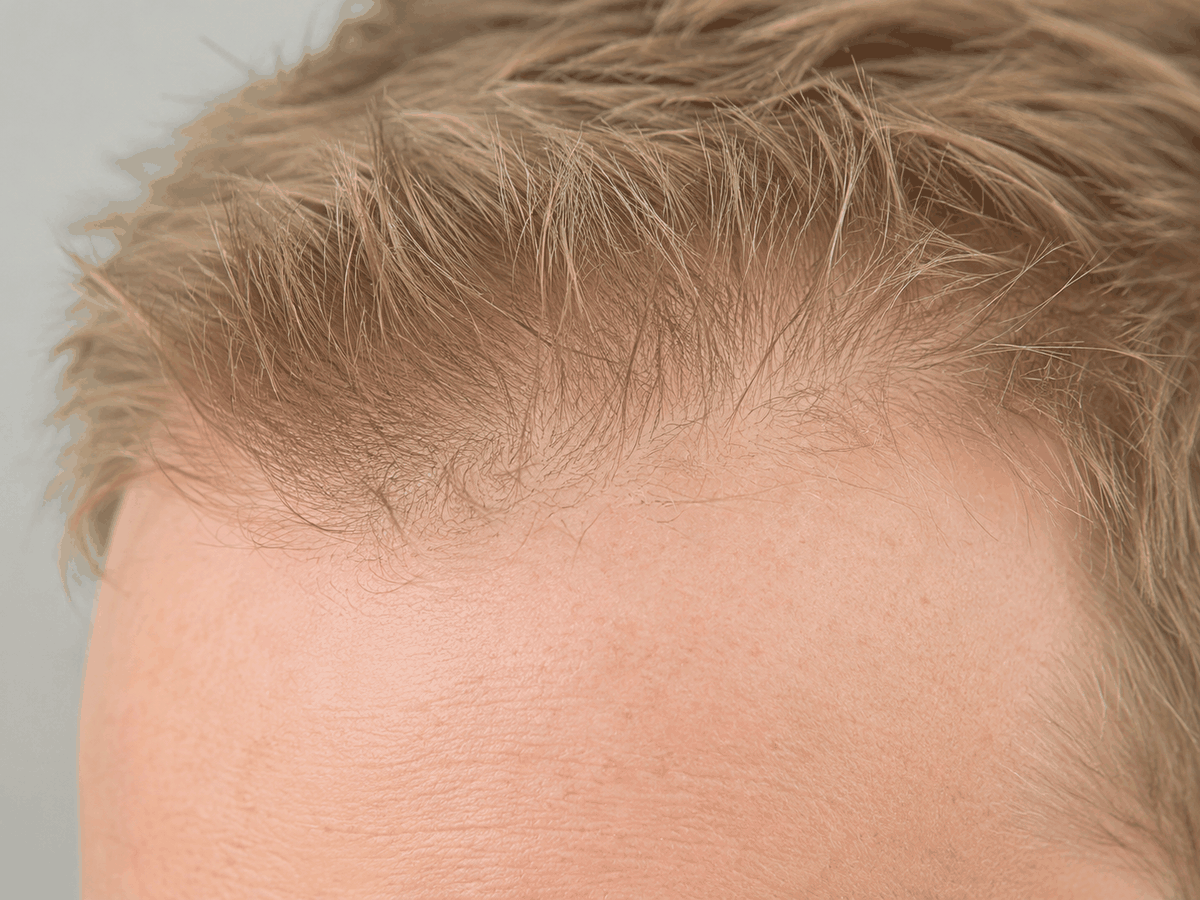
The most common cause of hair loss in men is hereditary hair loss. This type usually develops gradually and is characterized by receding temples, a receding hairline, or a thinning crown.
Did the hair loss start suddenly, is it spread across the entire scalp, or did it occur after illness, stress, weight loss, or surgery? Then there may be another, sometimes temporary, cause at play.

Unsure about the cause? Read our articles on hair loss in men and hair loss due to stress or genetics.
What actually works for hair loss?
Not every treatment is equally well-researched. The evidence ladder below shows how strong the scientific backing is for each approach.
| Approach | Evidence | Role |
|---|---|---|
| Finasteride | Strong | Inhibits DHT and targets hereditary hair loss. Prescription only. |
| Minoxidil | Strong | Stimulates hair growth. As a lotion or off-label as a tablet. |
| Ketoconazole shampoo | Limited | Possibly a supporting role, but not a replacement. |
| Herbs and oils | Weak | Small studies of limited quality. |
| Vitamins and supplements | None without a deficiency | Only useful when a deficiency has been established. |
| Hair transplant | Procedure | Relocates hair but does not stop the cause. |
Treatments with the strongest evidence
For hereditary hair loss, finasteride and minoxidil are the best-researched options. They work in different ways.
Finasteride
Finasteride reduces DHT production, targeting the process behind hereditary hair loss. It requires a prescription.
Read more in our article about finasteride.
Minoxidil
Minoxidil stimulates hair growth but does not lower DHT. It is available as a lotion and is prescribed off-label as a tablet at 3CO.
Read more in our article about minoxidil.
These treatments can slow down hair loss and promote regrowth. The chance of success is usually highest when you start early.
Treatments with limited or weak evidence
Ketoconazole shampoo
Ketoconazole shampoo is primarily helpful for scalp issues such as dandruff, itching, flaking, or seborrheic dermatitis. It can soothe the scalp, but it is not a proven DHT-lowering treatment and is not a substitute for finasteride in cases of hereditary hair loss.
Read more in ketoconazole shampoo.
Herbs and oils
Saw palmetto, rosemary oil, and pumpkin seed oil are not serious alternatives to proven treatments for hereditary hair loss. The research is limited and of low quality, meaning there is no convincing evidence that these remedies noticeably slow down hair loss or provide significant regrowth. In practice, you should expect little to no results.
Also see hair growth products compared.
Vitamins and supplements
Biotin, vitamins, and other supplements have not been proven to help with hereditary hair loss if you do not have a deficiency.
If a deficiency has been diagnosed, such as in iron or vitamin D, supplementation may be useful. In that case, you are treating the deficiency, not the hereditary predisposition. Deficiencies are rare with a normal diet.
Read more in vitamins for hair loss and biotin for hair.
Hair transplant
In a hair transplant, hair follicles are moved from the back or sides to thinning areas. This can improve your appearance, but it does not stop the underlying hair loss. The surrounding natural hair may therefore continue to thin.
A hair transplant is therefore usually a supplement and not the first step in treating hair loss.
Read more in hair transplant or medication.
What can you do yourself?
Handle your hair gently and avoid pulling it tight, brushing it harshly, or using aggressive treatments. Also, ensure you have a sufficient and varied diet.
Do you think stress or a deficiency might be a factor? If so, get it checked out rather than taking supplements on your own initiative.
These measures support overall hair health, but they will not stop hereditary hair loss.
What should you avoid doing?
Don't wait too long if your hair is gradually thinning. It is usually easier to maintain existing hair than to regrow hair that has already been lost.
Also, do not determine your own dosage or combine treatments without medical supervision. Using more does not automatically lead to better results and may increase the risk of side effects.
Furthermore, do not switch treatments every few weeks. Hair growth is a slow process, and it usually takes several months to evaluate the results.
Online consultation for hereditary hair loss
Do you think you are experiencing hereditary hair loss? You can start an online consultation with 3CO.
You will complete a medical questionnaire, after which a registered physician will assess whether a treatment is suitable and safe for you. If approved, the medication will be delivered to your home via our partner pharmacy.
Frequently asked questions about treating hair loss
What is the first step with hair loss?
First establish the cause. Hereditary hair loss usually develops gradually with deeper receding temples or a thinner crown. Sudden, diffuse shedding or round bald patches may point to something else.
What works best against hereditary hair loss?
Finasteride and minoxidil have the strongest scientific basis. Which treatment suits you and is safe for you depends on your personal situation.
Do shampoos and natural remedies help?
Ketoconazole shampoo may have a limited supporting role. For products such as rosemary oil, saw palmetto and pumpkin seed oil the evidence is weak.
Do vitamins or biotin help against hair loss?
Not if you do not have a deficiency. If a deficiency has been established, supplementation can be useful. You are then treating the deficiency and not the genetic predisposition.
Is a hair transplant a solution?
A hair transplant can fill in thin areas but does not stop hereditary hair loss. The surrounding natural hair can therefore continue to thin.
How quickly do you see results from treatment?
A first change usually only becomes visible after a few months. A proper assessment often takes six to twelve months. With minoxidil, shedding can temporarily increase at the start.
When can I start a consultation at 3CO?
If you think you have hereditary hair loss, you can start an online consultation. A registered doctor assesses whether a treatment suits you and is safe for you.
Sources
- Gupta AK et al. Comparative effect of conventional and non-conventional over-the-counter treatments for male androgenetic alopecia: a systematic review and network meta-analysis. International Journal of Molecular Sciences, 2025.
- Hosking AM et al. Complementary and alternative supplements: a review of dermatologic effectiveness for androgenetic alopecia. Baylor University Medical Center Proceedings, 2024.
- Bin Rubaian NF et al. An overview of commonly used natural alternatives for the treatment of androgenetic alopecia, with special emphasis on rosemary oil. Clinical, Cosmetic and Investigational Dermatology, 2024.
- Evron E et al. Natural hair supplement: friend or foe? Saw palmetto, a systematic review in alopecia. Skin Appendage Disorders, 2020.
- Dutch College of General Practitioners. NHG Treatment Guideline for Alopecia.
- Pharmacotherapeutic Compass. National Health Care Institute.